See the reaction at work
Glucose Oxidase for Egg Powder and Egg Product Quality
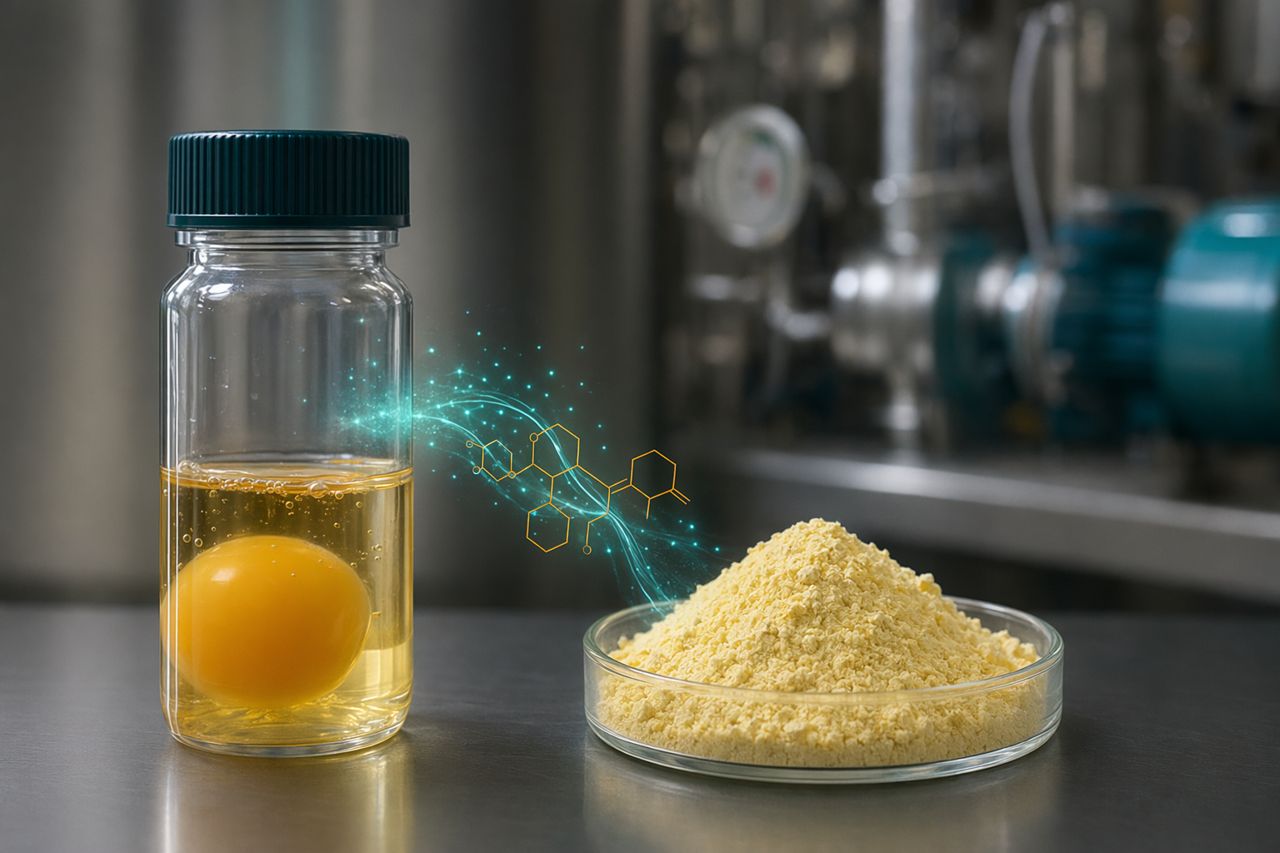
Egg powders and concentrated egg ingredients are sensitive to residual glucose. During drying and storage, glucose can react with egg proteins through Maillard pathways, leading to browning, cooked or caramel notes, solubility loss, and inconsistent functional performance.
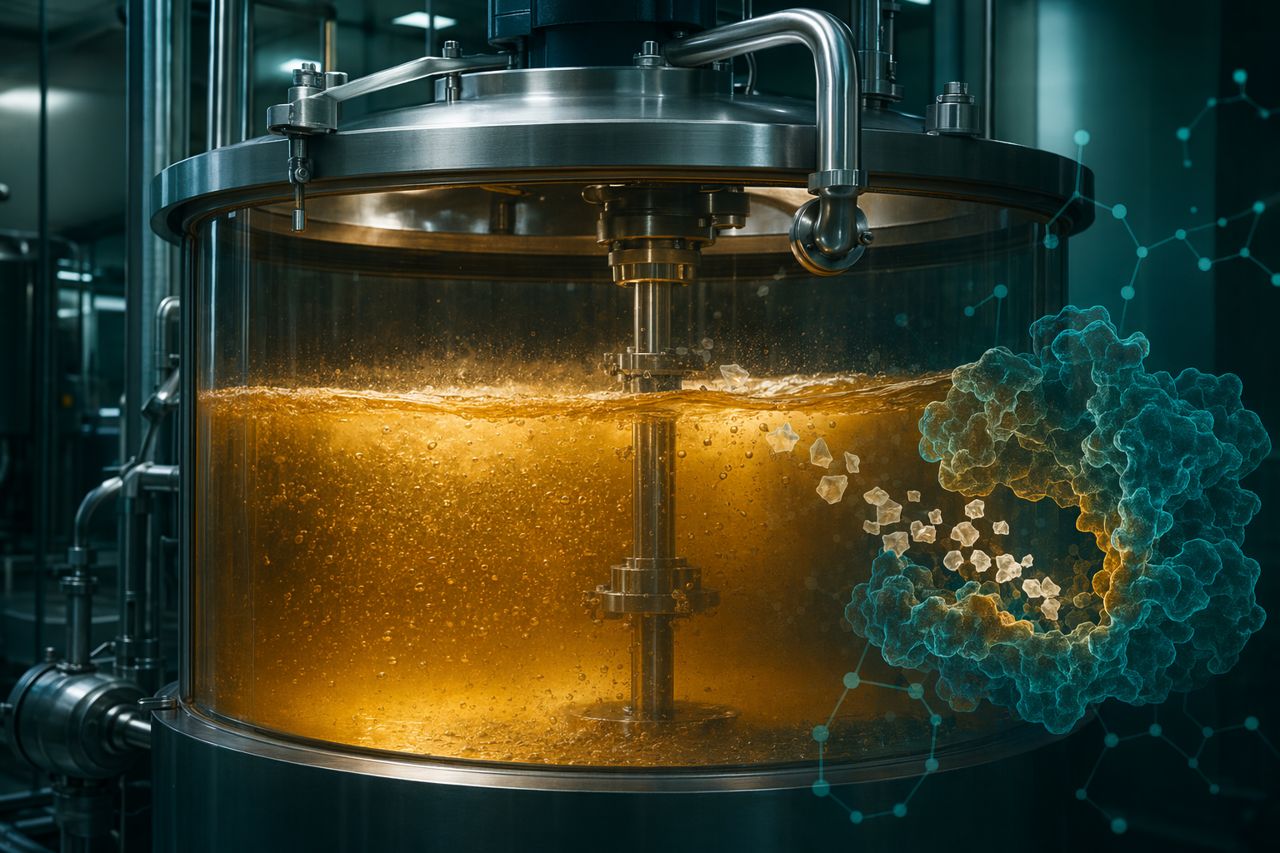
Glucose Oxidase is used before drying to convert glucose into gluconic acid while consuming oxygen and forming a controlled peroxide intermediate. In egg processing, it is commonly paired with catalase or an equivalent peroxide-management step to protect proteins and support oxygen turnover.
The result is a cleaner pre-drying stream: lower glucose pressure, improved color retention, and better storage stability for egg powders and egg-based ingredients.
Where It Fits in Egg Processing
Glucose Oxidase Solutions is designed for liquid egg and egg ingredient streams where glucose removal is required before thermal concentration or drying.
Typical use cases include:
- Whole egg powder production
- Egg yolk powder and yolk ingredient streams
- Egg white powder where glucose-related browning is a concern
- Blended egg systems used in bakery, sauces, dressings, noodles, and prepared foods
- Ingredient streams requiring improved color, odor, solubility, and shelf-life consistency
What the Enzyme Does
Glucose Oxidase catalyzes the oxidation of beta-D-glucose in the presence of oxygen. In commercial egg processing, this provides a targeted way to reduce residual glucose before drying.
Process effect:
- Glucose is converted toward gluconic acid.
- Oxygen is consumed as part of the reaction.
- Hydrogen peroxide is formed as an intermediate.
- Peroxide is managed through catalase, heat treatment, or validated downstream control.
- The treated egg stream proceeds to pasteurization, concentration, or drying according to the processor’s line design.
This approach helps reduce the main sugar substrate responsible for non-enzymatic browning during spray drying and storage.
Commercial Benefits for Egg Powder Producers
Better color control
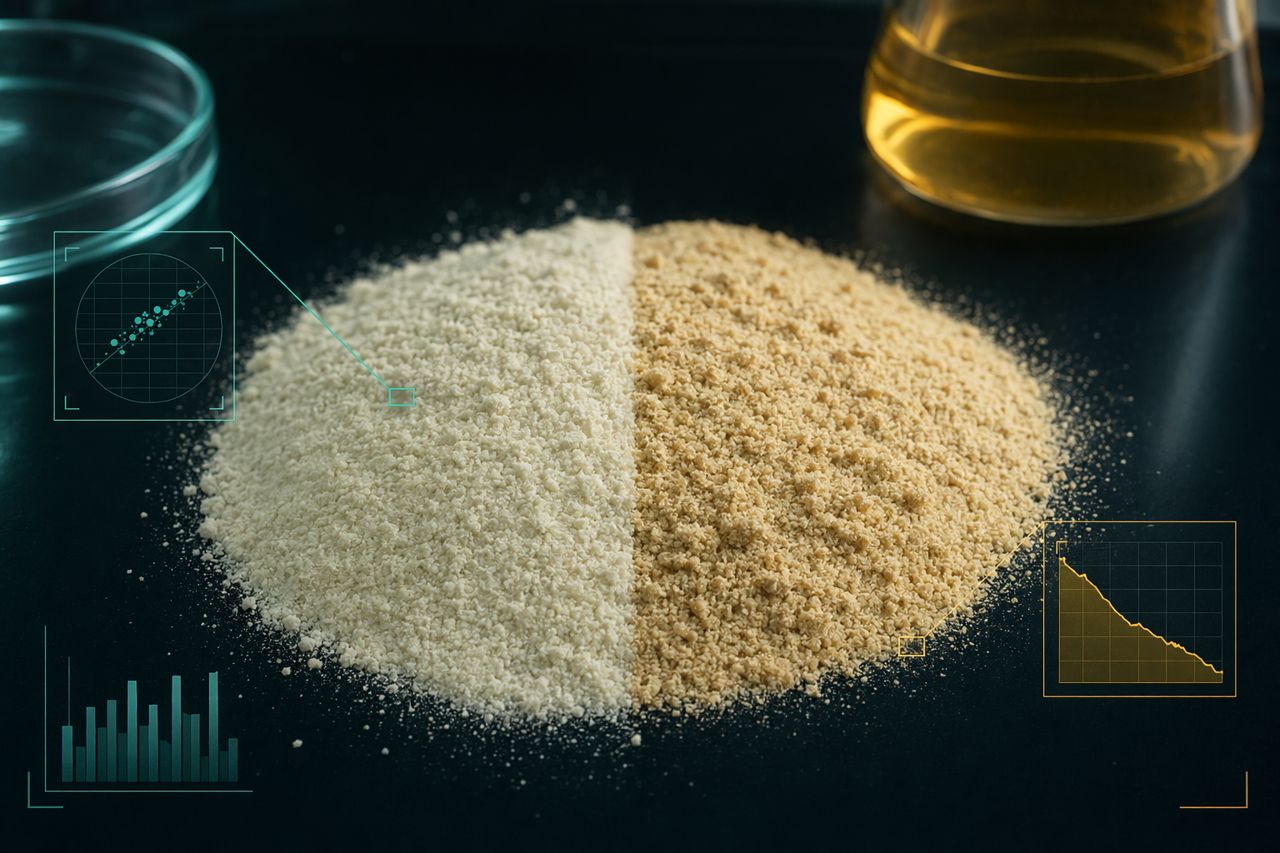
Reducing glucose before drying helps limit darkening and yellow-brown drift in finished egg powders. This is especially important for customers specifying pale, uniform color in bakery, pasta, confectionery, or prepared-food applications.
Reduced off-flavor development
Lower glucose availability can reduce the formation of cooked, toasted, or storage-related notes associated with Maillard chemistry. This supports cleaner sensory performance in reconstituted egg systems and finished food applications.
Improved storage stability
Egg powders are often stored, transported, and used over extended periods. Glucose control helps reduce quality movement during shelf life, especially in warm or variable storage conditions.
Better functional consistency
Protein functionality matters in egg powders. Browning and uncontrolled oxidative conditions can affect solubility, foaming, emulsification, and gelling behavior. A controlled glucose-reduction step helps protect downstream performance.
More predictable customer specifications
For industrial buyers, the value is consistency: color, odor, dispersibility, and application performance that remain closer to target across lots.
Key Process Variables to Control
Glucose Oxidase performs best when the processing environment supports the reaction and protects the egg matrix.
Oxygen availability
The reaction requires oxygen. In viscous egg streams, oxygen transfer can become the limiting factor. Mixing, headspace design, aeration strategy, and tank geometry should be reviewed during trials.
Peroxide management
Hydrogen peroxide must be controlled to avoid protein damage or residual quality risk. Many processors use catalase in sequence or combination with Glucose Oxidase. The exact approach should be validated against product type, residence time, and downstream heat treatment.
pH movement
The reaction can contribute to mild acidification as gluconic acid forms. Formulation and process teams should monitor pH where protein functionality, viscosity, or customer specifications are pH-sensitive.
Temperature window
Treatment temperature should balance enzyme performance with microbial control and egg protein stability. The ideal operating point depends on the egg stream, holding time, and downstream thermal step.
Time and dosage
Enzyme addition should be based on incoming glucose load, desired residual glucose target, oxygen transfer, and available residence time. Glucose Oxidase Solutions supports application trials to define a practical treatment condition for each line.
Inactivation and downstream compatibility
The enzyme system should be integrated with pasteurization, concentration, and drying so residual activity and peroxide are controlled before the finished powder is released.
Suitable Egg Streams
Glucose Oxidase Solutions can be evaluated in:
- Liquid whole egg
- Liquid egg yolk
- Liquid egg white
- Salted or sugared egg systems, subject to formulation review
- Concentrated egg intermediates before drying
- Rework or blend streams where browning control is required
Performance depends on solids content, viscosity, oxygen transfer, pH, temperature, microbial controls, and prior heat history.
Implementation Workflow
A practical plant trial normally follows this sequence:
- Define the finished powder quality target: color, odor, solubility, functional performance, and residual glucose target.
- Characterize the incoming egg stream: product type, solids, pH, glucose level, viscosity, and hold conditions.
- Select the treatment point before drying or concentration.
- Evaluate oxygen transfer and mixing without excessive foam or shear damage.
- Add Glucose Oxidase Solutions with peroxide-management control.
- Monitor glucose reduction, pH movement, peroxide status, and sensory indicators.
- Validate drying performance and finished powder shelf stability.
- Lock the commercial condition into the plant quality plan.
Quality and Procurement Considerations
For B2B sourcing, Glucose Oxidase Solutions can be specified against the practical needs of egg processors and ingredient manufacturers.
Procurement teams commonly request:
- Food-processing suitability documentation
- Product data sheet and safety data sheet
- Allergen and dietary status declarations
- Non-GMO or region-specific compliance support where required
- Lot traceability and certificate of analysis
- Recommended storage and handling conditions
- Packaging format aligned with plant use rate and hygiene controls
- Technical support for line trials and scale-up
Formulation Notes
Glucose Oxidase is not a colorant, preservative claim, or masking agent. It is a processing tool for reducing glucose-driven quality loss. The best results come from controlling the full reaction environment: enzyme contact, oxygen, peroxide, time, pH, temperature, and downstream heat treatment.
In egg applications, the commercial objective is not simply enzyme addition. It is reliable glucose reduction before the conditions that accelerate browning.
Request Pricing or a Process Review
Tell us your egg stream, target powder specification, and current drying process. Glucose Oxidase Solutions can help evaluate whether Glucose Oxidase is a fit for your quality and production goals.