See the reaction at work
Glucose Oxidase in Animal Feed Formulations
Glucose Oxidase is used in animal feed additive concepts where formulators want controlled enzymatic conversion of glucose and oxygen into gluconic acid and low-level hydrogen peroxide within a defined feed or gut-environment strategy.
For procurement and formulation teams, the commercial question is not simply whether Glucose Oxidase is present. It is whether the selected grade, format, carrier system, and handling profile fit the intended species, feed process, premix route, and regulatory position.
Glucose Oxidase Solutions supports B2B buyers evaluating Glucose Oxidase for poultry, swine, and aquaculture feed programs where oxygen management, organic-acid generation, and microbial-environment control are part of the formulation objective.
What Glucose Oxidase Does in Feed Concepts
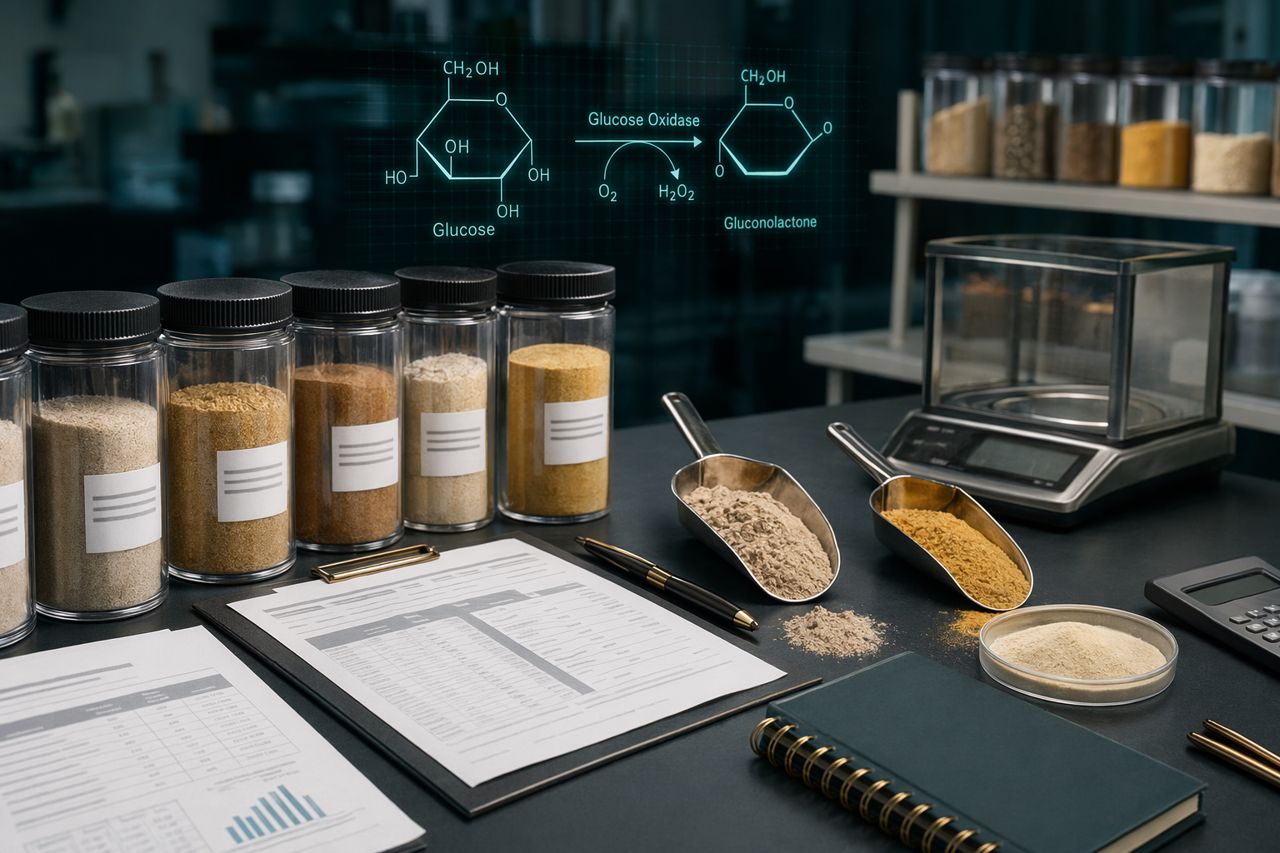
Glucose Oxidase catalyzes the oxidation of glucose in the presence of oxygen. The reaction produces gluconic acid and hydrogen peroxide as functional reaction products.
In feed formulation work, this chemistry may support several objectives:
- Localized acidification through generation of gluconic acid from available glucose.
- Oxygen reduction in microenvironments where enzymatic oxygen consumption is desirable.
- Microbial-environment management through reaction products that may influence competing organisms under defined conditions.
- Formulation support alongside organic acids, probiotics, enzymes, yeast derivatives, minerals, and protected additives.
- Feed-quality concepts where oxygen-aware systems are being explored for ingredient stability or preservation support.
The actual outcome depends on substrate availability, moisture, oxygen access, temperature exposure, retention after processing, inclusion strategy, and the full additive matrix.
Species and Feed Segments
Poultry Feed
In poultry formulations, Glucose Oxidase is typically evaluated as part of broader gut-environment and feed-efficiency concepts. It may be considered for broilers, layers, and breeder nutrition programs where additive systems are designed around acidification, microbial balance, and enzyme-supported feed functionality.
Key formulation questions include:
- Is the enzyme being added through a premix, complete feed, liquid application, or post-pellet step?
- Will pelleting, conditioning, or storage temperature reduce functional retention?
- Is the formulation supplying enough accessible glucose or related substrate sources?
- Are organic acids, probiotics, or other enzymes present that may interact with the same objective?
Swine Feed
In swine diets, Glucose Oxidase may be evaluated in starter, grower, or specialty feed concepts where controlled acidification and microbial-environment support are desired. Young-animal formulations often require particular attention to palatability, ingredient variability, and compatibility with acidifiers or mineral systems.
Procurement teams should align with technical stakeholders on the required product format, carrier, particle behavior, and heat exposure tolerance before sourcing.
Aquaculture Feed
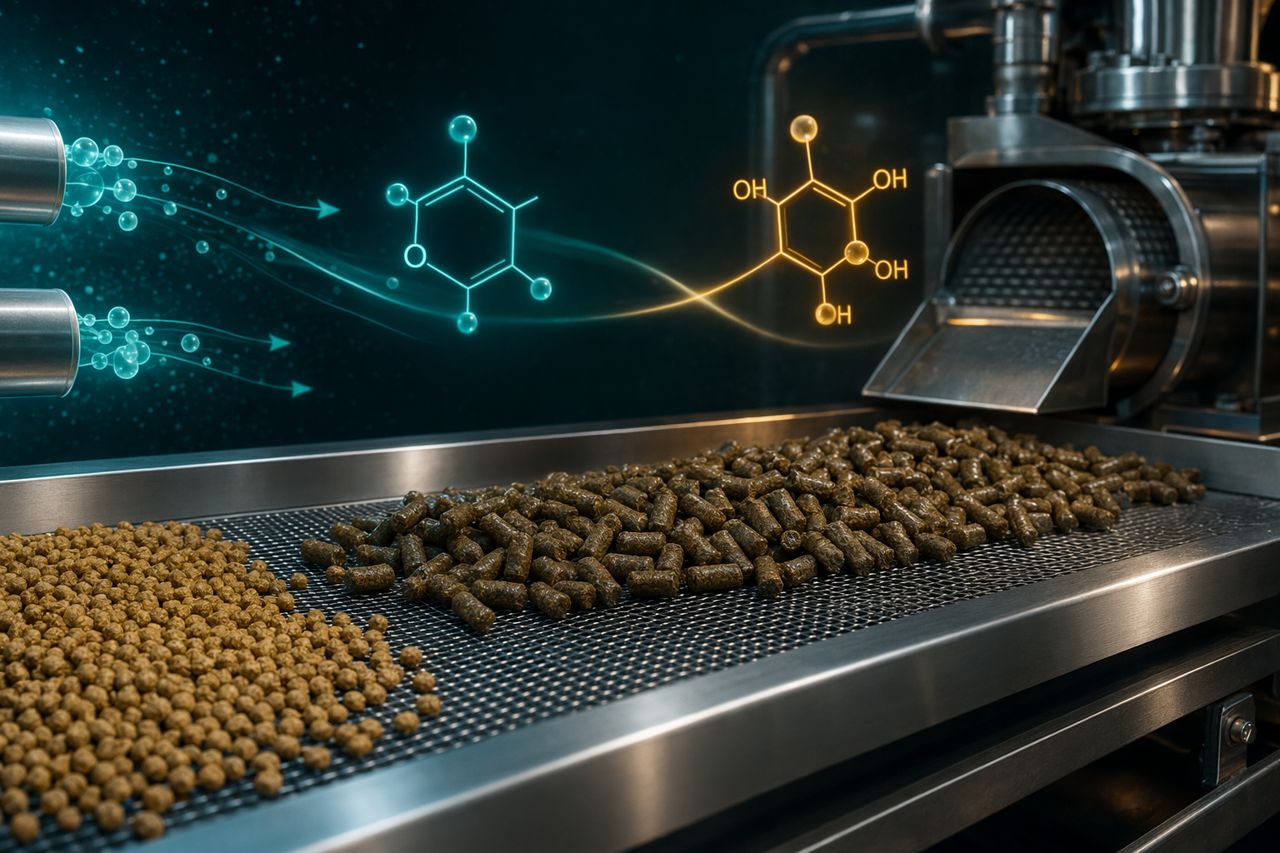
Aquaculture feed systems create a different formulation environment. Extrusion, water stability, oil coating, and feed handling can affect enzyme exposure and retention. For aquaculture concepts, Glucose Oxidase selection should account for processing route, coating strategy, species target, and whether the product is intended to act within feed, during storage, or after ingestion.
Functional Fit by Formulation Objective
| Formulation objective | How Glucose Oxidase may contribute | Key buyer questions |
|---|---|---|
| Acidification support | Converts glucose into gluconic acid under suitable conditions | What is the substrate source and where should conversion occur? |
| Oxygen-aware formulation | Consumes oxygen as part of the reaction pathway | Is oxygen access available at the intended point of function? |
| Microbial-environment control | Produces reaction products that may influence microbial conditions | What evidence is required for the target species and market? |
| Premix integration | Can be supplied in formats suited to dry blending or controlled addition | What carrier, flow, dust profile, and compatibility are required? |
| Post-processing addition | May help avoid excessive heat exposure | Is there a liquid, coating, or top-dress route available? |
Processing and Stability Considerations
Glucose Oxidase is a protein enzyme, so process exposure matters. Heat, moisture, pressure, pH, metal ions, oxidizing systems, and storage humidity can all influence retained functionality.
When specifying a feed-grade Glucose Oxidase, define the intended process path early:
- Dry premix blending
- Complete feed inclusion
- Pelleted feed
- Extruded aquafeed
- Liquid application
- Oil coating or post-pellet coating
- Mineral or acidifier premix systems
- Multi-enzyme additive blends
For harsher processes, buyers may need a protected, coated, or otherwise stabilized format. For liquid systems, dispersion, preservation, viscosity, and storage conditions become more important than flow behavior.
Compatibility with Other Feed Additives
Glucose Oxidase is often evaluated alongside other additive categories. Compatibility should be checked case by case, particularly when the formula includes:
- Organic acids and acid salts
- Phytase, xylanase, beta-glucanase, protease, or multi-enzyme blends
- Probiotics or direct-fed microbials
- Yeast products and fermentation metabolites
- Trace minerals and chelated minerals
- Antioxidants and preservation systems
- Pellet binders, carriers, and anti-caking agents
Because Glucose Oxidase uses oxygen and glucose as reaction inputs, its performance is tied to the surrounding matrix. A technically strong quotation should therefore include more than price. It should clarify format, carrier, intended use, storage, handling, and documentation.
Specification Points to Confirm Before Purchasing
Use this checklist when requesting a commercial offer:
- Application target: poultry, swine, aquaculture, premix, compound feed, or specialty additive.
- Product form: powder, granule, coated granule, liquid, or custom blend.
- Carrier system: mineral, carbohydrate, starch-based, or other approved carrier.
- Processing exposure: mash, pellet, extrusion, coating, or post-process addition.
- Compatibility requirements: acids, minerals, probiotics, other enzymes, or preservatives.
- Regulatory documentation: market-specific feed compliance, safety data, and technical dossier needs.
- Quality documentation: specification sheet, COA format, allergen statement where relevant, contaminant limits, and microbiological expectations.
- Packaging: bag, drum, tote, or bulk format depending on volume and handling.
- Shelf-life and storage: temperature, humidity, resealing, and warehouse conditions.
- Trial support: sample availability, formulation discussion, and scale-up planning.
Commercial Buying Notes
For B2B buyers, the lowest-cost enzyme line is not always the best fit. In feed applications, total value depends on whether the grade survives the process, disperses consistently, stays compatible in the premix, and arrives with documentation acceptable to the purchasing region.
Glucose Oxidase Solutions can support discussions around:
- Feed-grade Glucose Oxidase sourcing
- Dry or liquid format selection
- Coated or stabilized options
- Premix and compound feed integration
- Documentation packages for buyer review
- Bulk supply planning and repeat-order consistency
- Sample requests for internal formulation evaluation
No single Glucose Oxidase format fits every feed program. The right specification should be built around the process, species, and commercial goal.
Regulatory and Claim Positioning
Feed additive regulations vary by country and end-use. Glucose Oxidase should be positioned according to the applicable regulatory framework, approved use category, label language, and documentation requirements in the buyer’s market.
Glucose Oxidase Solutions does not recommend making unsupported animal-performance, disease-treatment, or antimicrobial replacement claims. Any market-facing claim should be reviewed against local feed law, product data, and the buyer’s own validation work.
Request a Quote or Get Pricing
Tell us the species, process route, target format, annual volume, and documentation needs. The Glucose Oxidase Solutions team will review the requirement and respond with a suitable Glucose Oxidase supply option.