See the reaction at work
Glucose Oxidase in Baking and Dough Strengthening
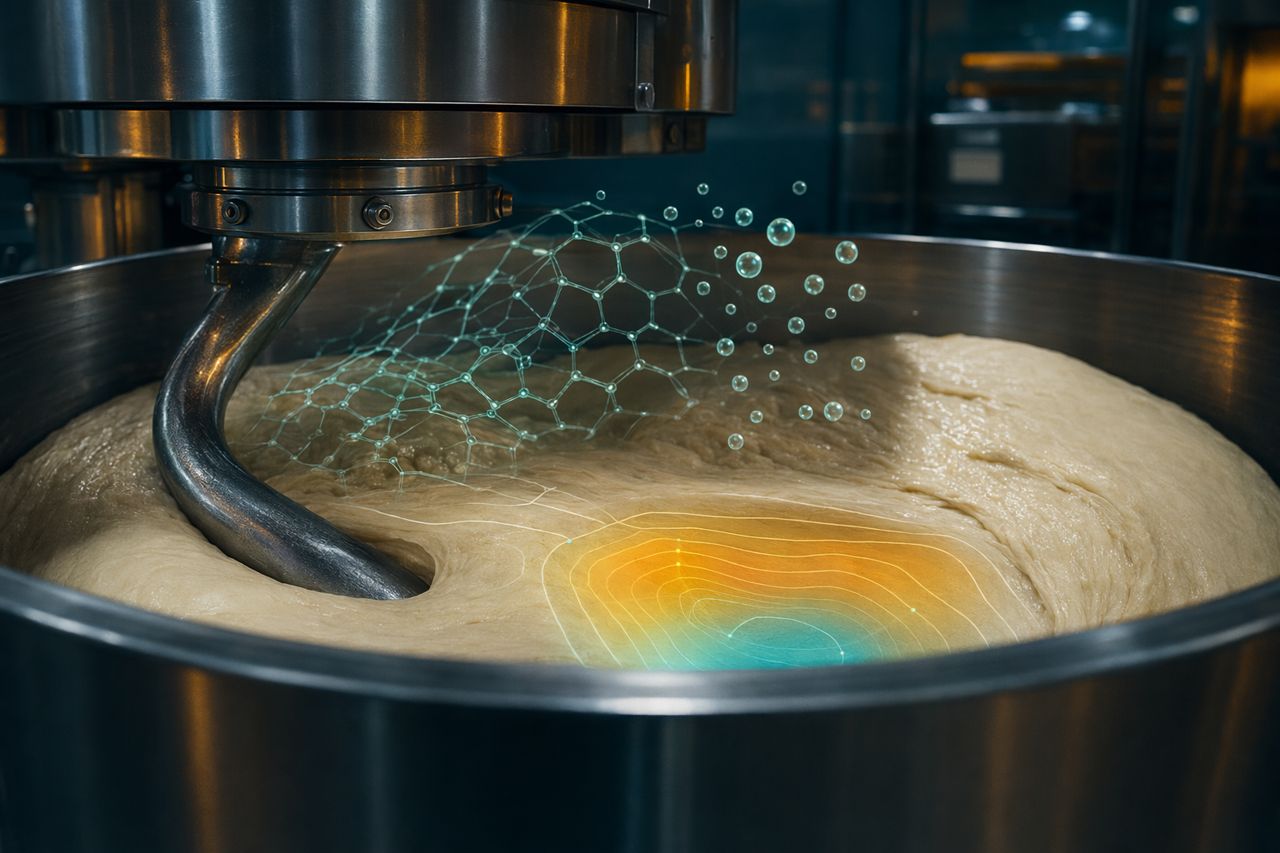
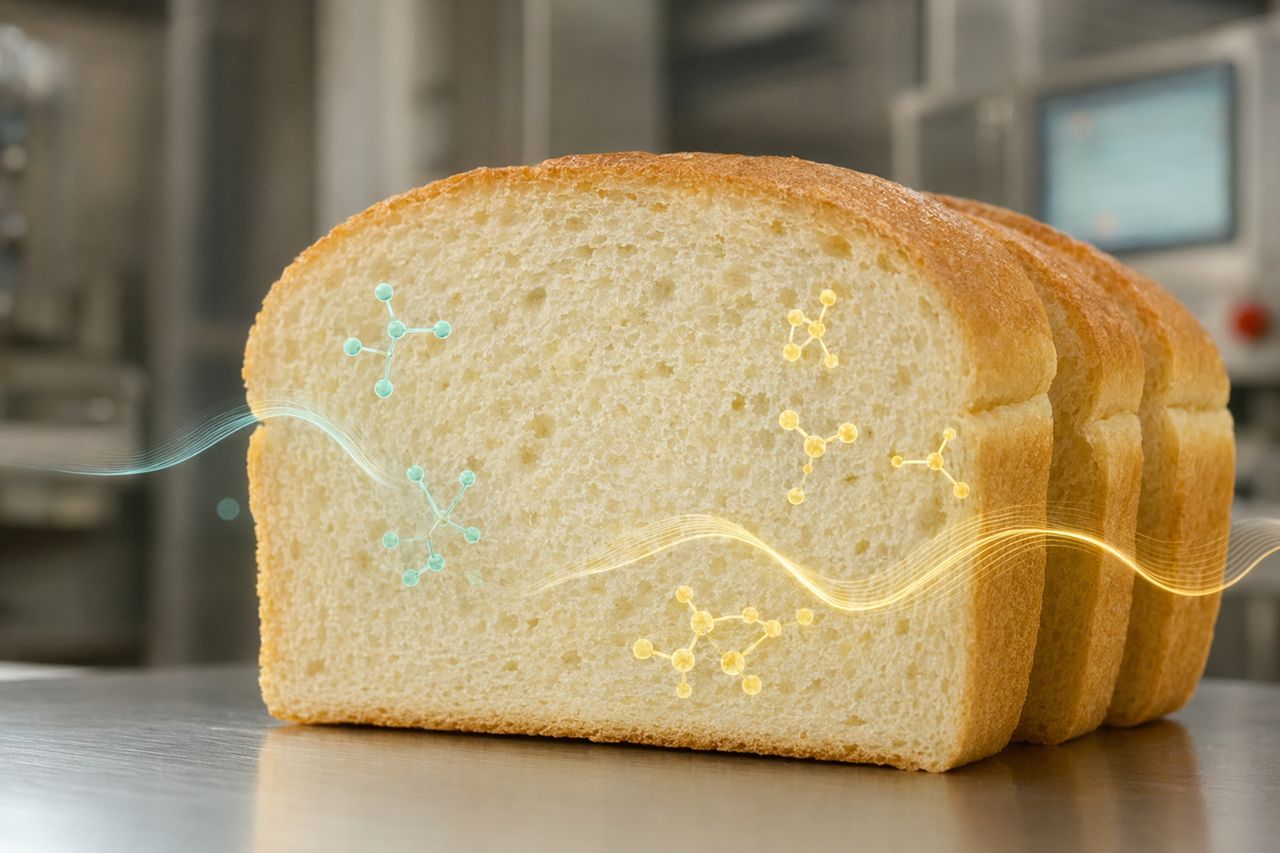
Glucose Oxidase is used in wheat-based baking systems to create controlled oxidative effects during mixing, proofing, and early bake. In the presence of glucose and oxygen, the enzyme forms gluconic acid and hydrogen peroxide. The peroxide generated in situ can support gluten network development by promoting disulfide bond formation, improving dough elasticity, gas retention, handling tolerance, and finished crumb structure.
For industrial bakeries, premix manufacturers, flour treatment specialists, and improver blenders, Glucose Oxidase is a clean, process-responsive tool for strengthening dough without relying only on direct oxidants. Its value is highest where consistent machinability, proof stability, loaf volume, and slice quality are commercial priorities. Glucose Oxidase Solutions supplies it in bulk to industrial bakeries, flour mills, improver and premix makers and the distributors who serve them, quoted per order.
Wholesale and bulk supply for manufacturers, distributors and resellers. Every glucose oxidase order is quoted individually. Request a quote with the grade or application, the quantity you need and the destination country.
Why formulators use Glucose Oxidase in dough systems
Glucose Oxidase helps convert normal dough oxygen exposure into functional gluten strengthening. The effect is gradual and formulation-dependent, which makes it useful for applications where dough needs reinforcement without becoming tight too early.
Common performance targets include:
- Improved dough strength and elasticity
- Better gas retention during proofing
- Increased tolerance to mixing, sheeting, dividing, and moulding
- More stable loaf volume across variable flour lots
- Finer, more uniform crumb structure
- Reduced stickiness in certain high-hydration or mechanically stressed doughs
- Support for softer handling while maintaining structural integrity
How it works in baking
During mixing, oxygen is incorporated into dough. Glucose Oxidase uses available glucose and oxygen to generate gluconic acid and hydrogen peroxide. The peroxide then contributes to oxidative gluten development, helping strengthen the protein matrix that traps fermentation gas.
This makes Glucose Oxidase especially relevant in systems where dough structure is challenged by:
- Weak or variable flour quality
- High-speed mixing and automated handling
- Frozen or retarded dough processes
- High hydration
- Long proof times
- Rich formulations with fat, sugar, or inclusions
- Soft wheat blends requiring additional structure
The response depends on flour protein quality, available fermentable sugars, oxygen incorporation, process time, water absorption, and the presence of other improver components.
Application areas
Pan bread and sandwich loaves
Glucose Oxidase can support loaf volume, sidewall strength, crumb resilience, and slicing performance. It is often considered where flour variability causes inconsistent proof height or weak dough under automated handling.
Buns and rolls
In buns and rolls, it can improve dough tolerance through dividing, rounding, and panning. The objective is typically a balance of strength, extensibility, and uniform final shape.
Frozen dough and retarded dough
Cold-chain doughs often lose strength during storage, thawing, or delayed proofing. Glucose Oxidase can help improve retained structure and reduce collapse risk, provided the oxidation profile is balanced with yeast activity and final eating quality.
Laminated and sheeted dough systems
For mechanically handled doughs, controlled strengthening may improve sheet integrity, reduce tearing, and support dimensional consistency. Evaluation should focus on machinability as well as baked texture.
Flour improvers and bakery premixes
Glucose Oxidase is commonly evaluated as part of improver blends alongside emulsifiers, amylases, xylanases, lipases, ascorbic acid, and other functional ingredients. Compatibility testing is essential because the oxidation balance affects dough feel, volume, and crumb.
What glucose oxidase bread improver blends contain
A typical bread blend combines fungal alpha-amylase, glucose oxidase, xylanase, maltogenic amylase, ascorbic acid, calcium stearoyl lactylate and starch. It is sold for larger loaf volume, a softer and finer crumb, a smoother crust with better colour, and a longer bread shelf life.
The recommended addition for that bread blend is 30-100 g per 100 kg of flour. It is packed in 1 kg bags and 10 kg drums, with a stated shelf life of 12 months.
Blends made for steamed buns and filled buns look different: fungal alpha-amylase, xylanase, lipase, glucose oxidase and starch, with no ascorbic acid or emulsifier in the list.
| Blend type | Companions listed with glucose oxidase | Packs |
|---|---|---|
| Pan bread blend | Fungal alpha-amylase, xylanase, maltogenic amylase, ascorbic acid, calcium stearoyl lactylate, starch | 1 kg bag, 10 kg drum |
| Steamed bun blend | Fungal alpha-amylase, xylanase, lipase, starch | 1 kg bag, 10 kg drum |
Common buying mistakes:
- Reading a blend dose as a glucose oxidase dose: the 30-100 g per 100 kg of flour applies to the whole bread blend, not to the enzyme inside it.
- Adding more ascorbic acid on top of a bread blend that already lists it, which can over-tighten the dough.
- Using a bread blend for steamed buns, where the dedicated blend relies on lipase and leaves out ascorbic acid.
- Buying more than 12 months of stock in one lot.
Formulation and process considerations
Glucose Oxidase is oxygen-aware. Its performance is shaped by both recipe and process conditions, not just ingredient addition.
Key variables to review during development:
- Flour strength, protein quality, and lot-to-lot variability
- Dough glucose availability and sugar profile
- Oxygen incorporation during mixing
- Mixing intensity and time
- Dough temperature and fermentation schedule
- pH and buffering capacity
- Hydration level
- Yeast activity and proof time
- Interaction with ascorbic acid or other oxidizing systems
- Interaction with reducing agents, emulsifiers, hydrocolloids, and enzyme blends
A well-designed pilot should compare dough rheology, proof stability, baked volume, crumb grain, texture over shelf life, and process handling observations. Over-oxidation can produce dough that is too tight, reduced extensibility, lower expansion, or a dry eating profile. The goal is not maximum oxidation; it is controlled structure.
What procurement teams should specify
When sourcing Glucose Oxidase for baking applications, procurement and technical teams should align on more than price. Commercial consistency depends on documentation, supply reliability, and formulation fit.
Useful specification points include:
- Enzyme proper name: Glucose Oxidase
- Intended use: baking, dough strengthening, flour improver, or premix application
- Physical form preference for your plant or blending process
- Carrier and excipient requirements
- Allergen, GMO, kosher, halal, or regional compliance needs where applicable
- Packaging format and palletization requirements
- Shelf-life expectations under stated storage conditions
- Required technical documentation and batch traceability
- Trial quantity, scale-up forecast, and recurring supply volume
Glucose Oxidase Solutions supports B2B evaluation with application-focused discussion, documentation review, and quote preparation for commercial supply planning.
Pilot evaluation checklist
Use a structured comparison against your current improver system or untreated flour baseline.
Recommended trial observations:
- Mixing curve and dough development time
- Dough feel after mixing and after floor time
- Extensibility versus elasticity balance
- Stickiness during processing
- Divider, rounder, sheeter, or moulder performance
- Proof height and proof stability
- Oven spring and finished volume
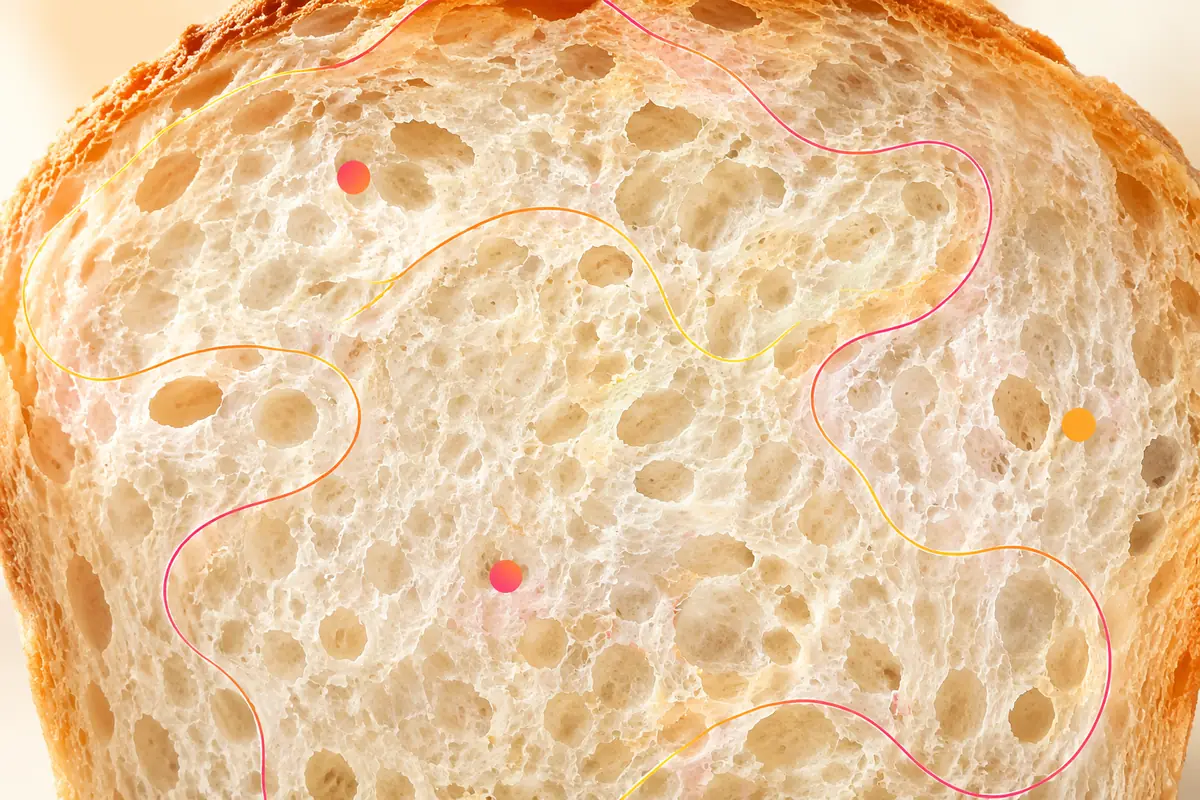
- Crumb grain, cell wall strength, and resilience
- Slice quality and breakage
- Texture and softness over shelf life
For best results, run a dosage ladder under your actual process conditions and test across more than one flour lot. The most commercially useful setting is usually the one that improves tolerance without making the dough resistant to expansion.
Typical fit within an improver system
Glucose Oxidase rarely works in isolation in modern industrial baking. It is typically positioned as one part of a broader dough-performance system.
It may be evaluated with:
- Ascorbic acid for complementary oxidation control
- Xylanase for dough handling and volume support
- Amylase for fermentation support and crumb softness
- Lipase or emulsifier systems for gas cell stabilization
- Hydrocolloids for water management and softness
- Flour correction systems for variable wheat quality
The technical task is to tune the total oxidation and dough-conditioning profile. Glucose Oxidase Solutions helps buyers frame this evaluation so purchasing decisions reflect process performance, not just ingredient comparison.
Request pricing for Glucose Oxidase in baking
Use the inquiry form at the foot of this page to request a quote for glucose oxidase for baking, dough strengthening, flour treatment or improver blending. Send the product, the quantity, your preferred pack and the destination country; price and lead time are quoted per order.
Technical summary
Glucose Oxidase is a controlled oxidation enzyme for dough strengthening. In baking, it supports gluten network development through oxygen-dependent peroxide formation, helping improve dough tolerance, gas retention, loaf structure, and crumb uniformity. The best results come from matching the enzyme to flour quality, mixing energy, oxygen exposure, fermentation time, and the complete improver system.